Ethics and policy for invitations to Lambeth 2020
 Andrew Goddard writes: Last month Archbishop Justin fabricated his first public statements about his invitation policy for the Lambeth Conference in 2020. He is reported as having told The Times:
Well over ninety per cent of the Anglican Communion are conservative on problems of sexuality. I've invited all the bishops, including those in aforementioned-sex marriages. And I had to consider…getting as many people equally possible there and excluding as few as possible. It's a lose-lose situation. I had to take what is a actually difficult and painful determination to say, in order for the conference to be as representative as possible and get all the bishops in that location and non accept the run a risk of some provinces not coming because they felt I was pushing the envelope too far, that I couldn't ask all the spouses.
Instant reactions on social media showed this cursory explanation and justification was unlikely to satisfy the many people, across the range of views on sexuality, who were unhappy when the decision was originally announced (see for example Marcus Green's blog). It is of import to consider why that is the case, what these comments reveal about how decisions are being reached, and whether at that place is a better style forward.
In making difficult decisions equally a leader of a community, in deciding what it is right to practise, and in communicating that decision and its rationale there are many different approaches that tin can be taken. Ane spectrum is between a calculating pragmatism and a conviction-based policy. There are parallels here to the contrasting poles in moral philosophy between consequentialist ideals in which the end justifies the means and deontological ethics based on simply doing what one ought to do even when information technology appears likely to accept unpleasant consequences.
Computing Pragmatism
The explanation offered higher up appears much closer to the pole of computing pragmatism albeit a rather bleak and despairing one which views the situation as "a lose-lose situation". It's well-nigh as if the challenge is being framed every bit a sort of ecclesiastical form of the classic trolley problem: if I send out invitations to all bishops and spouses I'll accept started a trolley down a rail where it will run over hundreds of conservative, peculiarly African, bishops but perhaps I can pull a switch (past pulling out a few invitations), and the trolley will then be diverted and but run over two (at present iii) gay spouses. A "really difficult and painful decision" simply clearly the right ane if those are the circumstances and how the problem is framed. That this was how the decision was being framed was already suggested past the earlier comments of Kevin Robertson, one of the gay bishops whose hubby was not invited. He reported his private conversation with Justin Welby (before the ballot of a same-sex married priest as Bishop of Maine) in these words – "He said to me there are only two of you in the communion in this situation, you and Mary, and he said if I invite your spouses to the Lambeth Conference, at that place won't be a Lambeth Conference". A like formulation was reported in the defence offered before the commencement of the ACC:
The about painful function, to me, of the decisions that have to exist made, is that I know that, at every moment that I write a letter or brand a decision, I am making a decision most people — and that there is no decision that will result in nobody getting hurt. If I'd decided differently on the decision almost same-sex activity spouses — and it hurt a lot of people, by the way — I would have hurt a huge number of people elsewhere in the Communion. And there wasn't a dainty solution which I looked and thought, 'Nah, I don't want to exercise that, I'll take the nasty solution.' It's not equally simple as that.
The major problem with such a way of thinking and explanation for a decision is that it sounds horribly like that offered by the high priest Caiaphas co-ordinate to John 11:50 – "You exercise not realize that it is better for you lot that one human die for the people than that the whole nation perish". And that is how the policy and its rationale are being heard by many Anglicans. They are understandably outraged that information technology might be thought better, despite beingness committed to "radical Christian inclusion", to exclude a few gay spouses just to reduce the chance that the Lambeth Briefing not happen or the Anglican Communion disintegrate further. Once again, it appears to them, gay and lesbian Christians are being viewed equally expendable, a small enough minority to be sacrificed to placate the bourgeois bulk.
Conviction Policy: Whose Justice?
The arroyo at the alternative terminate of the spectrum is that of conviction-based policy. Information technology was brilliantly summed up by the so Bishop of Oxford, Richard Harries, in the face of criticism when he appointed Jeffrey John equally Bishop of Reading. Although I disagreed with the appointment I had great respect that in insisting on his decision Bishop Richard was putting into do, within his outlook, the principle "let justice exist done though the heavens fall".
The problem with Lambeth invitations, as with the engagement to Reading, is that we need to ask "Whose justice?" and the answers are very different and fundamentally incompatible.
For many Anglicans the demands of justice are clear as shown in the recently launched campaign for equal spousal relationship in the CofE whose open letter to the bishops protests against discrimination and asks "How can nosotros finer share the expert news of Jesus Christ and the beloved of God when nosotros ourselves bear unlovingly and unjustly?". This agreement is too what has led the University of Kent where the Lambeth Conference meets to protestation against the Archbishop's policy and state that "Council members were clear that exclusion of same sex spouses, on grounds of orientation, would exist contrary to the values of the University".
For many other Anglicans, nonetheless, the demands of justice are non understood with reference to categories of marriage equality and sexual orientation merely adamant from the style of righteousness which God has revealed in Scripture and congenital into creation and which they understand to include limiting moral sexual behaviour to inside the marriage of a man and a woman. For them the problem with the current invitation policy is non focussed on the exclusion of a few spouses. Their trouble is the fact that the Archbishop has, in a interruption with past precedent, "invited all the bishops, including those in same-sex activity marriages". He seems thereby to view biblical and Communion teaching on marriage and sexual holiness as a matter of indifference (adiaphora) fifty-fifty though the ACC's focus on "going deeper in intentional discipleship" highlights the importance of a shared moral vision.
The former grouping, following this "allow justice be washed" approach, would say justice requires all bishops and spouses to be invited even if the Lambeth Briefing therefore falls. The latter group, post-obit this arroyo, would – fifty-fifty if the Lambeth Conference therefore falls – not invite either partner in a same-sexual activity matrimony and likely also disinvite all bishops, whatever their marital status or sexuality, who have approved same-sex marriage.
Which rationality?
In thinking about the invitations to the Lambeth Briefing and disagreements about the decisions already made information technology is important to consider these two different forms of rationality – calculating pragmatism and conviction policy. Is the argument about the invitation policy an argument within a particular course of rationality and how to utilise it or is it betwixtdifferent approaches and which 1 to utilize? The limited explanations and so far offered show the need for greater clarity hither.
The words of Archbishop Justin announced to present the conclusion as a calculated, painful, pragmatic compromise. As we've noted, many pass up this approach but insidethis approach serious questions can also be raised nigh the political calculation: Given, as he acknowledges, "Well over 90 per cent of the Anglican Communion are bourgeois on issues of sexuality" is it realistic to think that simply by excluding three spouses in a same-sex marriage simply even so inviting "all the bishops, including those in same-sex activity marriages" he has significantly reduced "the take chances of some provinces not coming because they felt I was pushing the envelope too far"? To render to the ecclesiastical trolley trouble – is there non the likelihood that, having pulled the switch so the trolley hits the gay spouses, nosotros volition observe that the trolley then continues down a track which loops back and so that it all the same runs into hundreds of conservative bishops anyway?
In contrast to the Times interview, the original explanation from the Secretarial assistant General of the Communion, appeared to exist more of a conviction-based policy:
Invitations have been sent to every active bishop. That is how it should be – we are recognising that all those consecrated into the office of bishop should exist able to attend. The invitation process has also needed to take account of the Anglican Communion's position on marriage which is that information technology is the lifelong union of a man and a woman. That is the position equally set up out in Resolution I.10 of the 1998 Lambeth Conference. Given this, it would be inappropriate for same-sexual practice spouses to be invited to the conference.
Within this approach there is a potential principled logic on the footing that these 3 individuals are not bishops' spouses co-ordinate to Communion instruction and so are not being invited on that basis. Just if this is the rationale then why is the Archbishop not offering this explanation and defending this line of reasoning? The arroyo does even so still raise a number of serious questions every bit to its coherence (as I take already set up out in some detail here, building on an earlier account here). A fundamental i of these is again highlighted in a 2022 interview with the Chief Executive Officer of the Lambeth Conference Company, recently reposted on the ACO website:
There will be differences in 2020. Every active bishop from effectually the Communion will be invited. Only at that place won't be a spouse's conference running in parallel. Instead the intention is to run a joint conference. We meet that bishops and their spouses often have a joint ministry then nosotros want to equip them both, rather than divide off the spouses.
Why, if this is a single conference, designed to back up a joint ministry, does the Lambeth 1998 resolution and its teaching only take a begetting on the invitations to non-bishops attention the articulation conference merely non to bishops?
A Principled Pragmatism?
In reality, of course, decision-making is non able to be divided simply into one of these ii poles on the spectrum. Calculated pragmatism, for instance, involves devising the best ways to secure certain ends and those ends are often sought because of deep principles. It is important to run across that there is a articulate principle embedded inside the Archbishop's strongly businesslike approach:
I had to consider…getting every bit many people every bit possible there and excluding as few as possible…
Hither we encounter a very strong and important principle guiding his decisions: it is shaped past his commitment to reconciliation and his vision of Christian unity. The problems with information technology are that information technology is expressed in crude numerical terms ("as many people equally possible…as few as possible"), a unproblematic dichotomy between "getting there" and "excluding", and an assumption that we know what it is people are either getting to or beingness excluded from ("there").
Must it exist "a lose-lose state of affairs"? Principled Pluralism
If nosotros approach the deep disagreements in the Communion (such as those summarised higher up with reference to how we decide what is just and correct) in this way, attempting to solve them by some course of calculating pragmatism which is willing to exclude some in lodge to maximise attendance at a common venture, so this volition almost certainly appear to exist "a lose-lose situation". It volition besides appear to many that there are no theological, ecclesiological or moral principles guiding policy decisions.
If, however, information technology is admitted that the trouble is that at that place are contrasting, competing, and seemingly incompatible, theological principles and visions now present within global Anglicanism then it may be possible to frame the questions in new ways. Across religion communities there is much wisdom that has been learned from inter-faith dialogue and co-functioning. These practices have to recognise and work with the reality of deep disagreements and the limits that these create for inter-faith relationships even as they piece of work to build mutual agreement and diminish conflict. Across the Christian church there is much wisdom that has been learned from ecumenical dialogue and co-operation. This, too, needs to admit both what is shared in common and what remains in dispute between different Christian traditions and denominations. Inter-denominational and ecumenical structures need to discern and be clear as to what degrees of agreement in truth be and hence what degrees of visible communion tin be expressed structurally. These structures will therefore have different forms as Christians seek to journey together as closely as possible even equally they too have to remain singled-out and so to some degree afar from i another in order for each to bear witness with integrity to what they believe in dissimilarity to some beau Christians.
If i were to apply the lessons learned from these areas to intra-Anglican gatherings and attempt to view such meetings through the lens of inter-religion or ecumenical ventures then the question tin be reframed into something similar
How, given the recent history and current fractured Anglican Communion with dumb and cleaved communion between provinces and bishops, can the Archbishop of Canterbury structure the Lambeth Conference and issue invitations to information technology in lodge both
(a) to gather as many as possible together to express, embody and enrich the highest degree of communion currently possible betwixt them, and too
(b) to enable the expression and apotheosis of an fifty-fifty higher degree of communion both in the present and in the hereafter between those – smaller in number – willing and able to pursue such communion on the ground of their wider and deeper shared beliefs?
Such an arroyo could recognise the reality of theological and moral pluralism among all those who stand in the Anglican tradition just seek to respond to it by means other than a consequentialist, calculating pragmatism which plays off excluding some so as to include others in a single undifferentiated gathering. This would be a principled arroyo to pluralism which could draw not only on the wisdom from the feel of inter-faith and ecumenical discussions only as well from the riches of recent Anglican (and wider catholic) communion ecclesiology. In doing so it could apply the already established principles that the Communion has a clear instruction on matrimony and sexuality which is still (every bit the Archbishop notes) overwhelmingly accepted by virtually Anglicans and that departing unilaterally from that teaching inevitably has relational and structural consequences equally regards a church'southward standing within the Communion, considering it impairs communion. Simply rather than merely imposing one principled viewpoint inside a "one-size-fits-all" structure this arroyo and perhaps letting the heavens fall every bit a result, this would seek to create a new form of Lambeth Briefing. This would apply these principles learned from other forms of conversation and co-operation beyond theological difference. Information technology would seek to create a Conference explicitly structured so as both to assemble together as big and diverse a group of Anglicans every bit possible while too visibly differentiating amongst them by giving expression in some way to the variable degrees of communion that now indisputably exist amid Anglicans as a result of their fundamentally dissimilar principled perspectives focussed on issues of marriage and sexual ethics.
Ecumenical postscript
In the last few days, announcements have been made about more invitations– those to ecumenical observers. This is a long tradition at Lambeth Conferences but it is beingness stressed that "invitations are existence extended to a greater number of Pentecostal and Evangelical Churches and bodies than at previous Lambeth Conferences" and particular attention has been given to invitations to the new province in N America (ACNA), although the response from its Primate shows the problems faced even in describing such decisions without causing offence. This invitation decision and his response further highlights the need for serious rethinking about the nature and structure of the Lambeth Conference.
The invitations have continued to exist structured equally if in that location is a clearly defined and basically united Anglican Communion and then a diverse number of other churches who are in vary degrees of communion with and separation from the Communion and the churches inside it. Every bit a event, all the churches in the former have had all their bishops invited ("we are recognising that all those consecrated into the role of bishop should be able to attend") while all the churches in the latter are only invited to send a certain number of observers.
In his Presidential Address to ACC, Archbishop Justin said
The miracle of the Communion is that through the piece of work of Jesus Christ lonely we are made one by the grace of God alone, not past our pick or our choice. For that reason our unity is a call of obedience in Christ. Through unity the beauty of the Communion is increased and is a blessing to the globe, and our unity volition draw us towards the unity of the whole Church, through which alone the world sees the truth of Christ.
Merely "the work of Jesus" through which "alone we are made ane by the grace of God alone, not by our option or our selection" is not a "miracle of the Communion" merely of the one, holy, catholic and apostolic church. The Communion and the churches inside information technology are merely a small and themselves increasingly internally divided role of the one fragmented and wounded body of Christ. They cannot claim for themselves the work of Jesus or entreatment to their ain obedience to Christ or speak of "our unity" as if they are a more united or more privileged part of the whole church building. The "beauty of the Communion is increased and is a approval to the world" and "will draw us towards the unity of the whole Church" only if nosotros are honest about the cleaved reality of our own common life and only if we seek a unity which includes a reference to truth.
It is the lack of unity in truth which explains the historic distinction at Lambeth Conferences between Communion bishops and ecumenical observers and which underlies the rationale for this new set of distinct invitations. Merely this lack of unity in truth now marks the churches, bishops and Instruments of the formal Communion likewise – nosotros are tragically condign less of a Communion and more of a gathering of ecumenical partners. This has been recognised to an extent by the Primates of the Communion making clear in 2022 and reaffirming in 2022 that representatives of certain provinces:
no longer represent us on ecumenical and interfaith bodies, should not be appointed or elected to an internal standing commission and that while participating in the internal bodies of the Anglican Communion, they will not take part in decision making on any issues pertaining to doctrine or polity.
Furthermore, in a manner unprecedented at any previous Lambeth Conferences, many provinces are now in fuller communion and greater unity in the truth with ACNA than they are now with a number of other Communion provinces.
In short, the classic, relatively clear, distinction between Communion bishops and ecumenical observers which has shaped invitation policy no longer makes any sense given the reality of the (in many cases diminishing) degrees of communion existing between diverse Anglican churches. Using these categories therefore every bit a tool to accost the recent divisions within global Anglicanism not only lacks coherence as confidence policy merely risks increasing those divisions and so is a questionable course of calculating pragmatism.
Decision: What sort of invitation to what sort of Conference?
Peradventure the underlying problem hither is that in our confused context we have no clarity and no seeming coherence as to the structure and rationale of the Conference and the varied invitations to it. In some cases nosotros are continuing with by processes while in others we are changing those, sometimes significantly. As a result, each set of invitations is increasingly becoming the focus of further confusion and conflict. Currently at that place are three categories of invitation just the distinctions between them in terms of applied involvement at the Briefing and the ecclesiological rationale for these distinctions and for the various invitation policies remains unclear.
In relation to Communion bishops, all have been invited in a break with past practice (every bit set out here especially in section C). This is despite the fact that past their actions many have acted in violation of the principles set down at the 1920 Conference a century ago that the churches of the Communion
are indeed independent, but independent with the Christian liberty which recognises the restraint of truth and dearest. They are not free to deny the truth. They are not free to ignore the fellowship.
Equally a result of these actions not apparently having consequences in relation to Lambeth invitations, although over 500 bishops and nearly 400 spouses have accepted invitations, it seems likely that at least 200 bishops will decline to nourish on principle while some attention may make clear their impaired or broken communion.
In relation to spouses, in a break with past do they are being invited not to an overlapping Spouses' Conference simply to a single joint briefing. It appears, however, that they will be excluded from certain parts of that conference and those spouses who are legally married to a bishop of the same sexual practice are wholly excluded.
In relation to ecumenical observers, many (perchance even about) Communion bishops invited to the Conference are formally in fuller communion with some of the churches in this category than they are with a number of the other Communion churches and bishops (while other Communion bishops are not in communion and in long-running legal battles with them over church building property). It is unclear how their part at the Conference will be different from that of Communion bishops and their spouses.
If that were not confusing plenty, when it comes to any controlling at the Conference (about which in that location are at present no public details) one assumes that the spouses and ecumenical observers will not participate. However, neither will all Communion bishops unless there is a reversal of the decision of the Primates in 2022 and 2017. And so there is a further, perhaps even more contentious, decision nearly differences among invitations that needs to be drawn and defended at some signal.
The former bishop of Liverpool, James Jones, wrote that the Communion "resembles a spilled bowl of spaghetti" and messiness will inevitably mark Lambeth 2020. There are, all the same, ways of thinking about, describing, and responding to our current mess (I recollect, for example, of The way of Anglican communion: Walking together before God drawing on Lambeth 1920) which offer a ameliorate path for the Lambeth Conference than that currently on offer in occasional official statements.
What nosotros urgently need is the construction and articulation of a coherent and compelling vision that has theological and ecclesiological integrity, is honest about the painful lived reality of our common life, and is in continuity with the responses developed in recent decades and what the Communion's General Secretarial assistant has recently summed up as "the principle of walking together at a distance equally a means of recognising and addressing difference of understanding and exercise across the Communion". In one case we accept such a vision we tin perhaps develop conviction policies on specifics and fifty-fifty observe a way towards a "win-win" situation which has a greater possibility of reaching the Archbishop's goal of "getting as many people as possible in that location and excluding as few as possible".
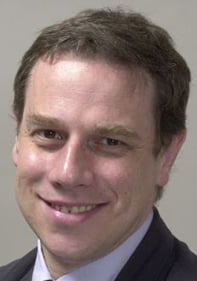
Revd Dr Andrew Goddard is Associate Director of the Kirby Laing Found for Christian Ethics (KLICE), Cambridge and Adjunct Assistant Professor of Anglican Studies, Fuller Theological Seminary, Pasadena, California.
If you enjoyed this, do share information technology on social media, perhaps using the buttons on the left. Follow me on Twitter @psephizo.Like my page on Facebook.
Much of my work is done on a freelance basis. If you have valued this post, would y'all considerdonating £1.20 a month to support the product of this blog?
If y'all enjoyed this, practise share it on social media (Facebook or Twitter) using the buttons on the left. Follow me on Twitter @psephizo. Like my page on Facebook.
Much of my work is done on a freelance ground. If you have valued this post, you tin brand a single or repeat donation through PayPal:
Comments policy: Proficient comments that engage with the content of the post, and share in respectful debate, tin can add real value. Seek first to understand, and then to be understood. Make the most charitable construal of the views of others and seek to larn from their perspectives. Don't view debate every bit a conflict to win; address the statement rather than tackling the person.
Source: https://www.psephizo.com/life-ministry/ethics-and-policy-for-invitations-to-lambeth-2020/
0 Response to "Ethics and policy for invitations to Lambeth 2020"
Post a Comment